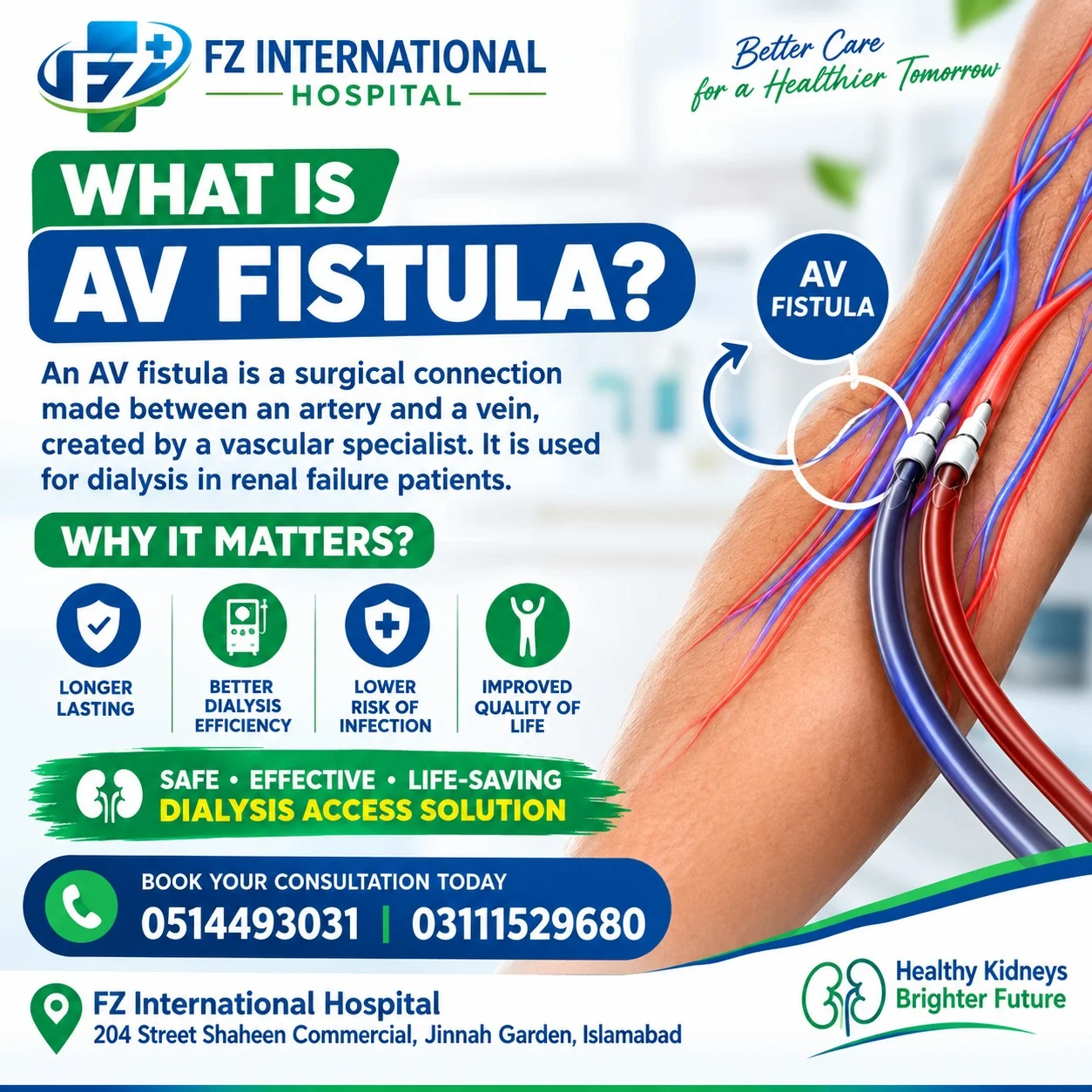
What is an AV fistula?
An arteriovenous fistula is a surgically created connection between an artery and a vein, usually in an arm. The vein develops over time so it can be used for haemodialysis when the access team confirms it is ready.
Who may need assessment?
People approaching long-term haemodialysis, or currently using a dialysis catheter, can discuss access options. The choice depends on vessel quality, overall health, expected treatment and personal preferences; a fistula is not right for every person.
- Consultation and previous dialysis-access history
- Examination and vascular ultrasound when indicated
- Creation surgery, maturation checks and access-management follow-up
- Second opinions on the proposed access plan
Surgery and recovery
The surgeon explains the proposed arm and site, anaesthesia and consent. Many procedures use local or regional anaesthesia and take roughly one to two hours, but the operation and admission plan vary. A same-day discharge is not guaranteed.
A fistula often needs several weeks to mature, commonly around six to twelve weeks, and sometimes longer or further treatment. Do not use it for dialysis until the access team assesses readiness.
Protecting your access
Follow the team’s wound-care and arm-protection instructions. Learn how to check the vibration or ‘thrill’. A missing or changed thrill, increasing swelling, redness, fever, a cold painful hand or bleeding requires prompt medical advice; heavy bleeding is an emergency.