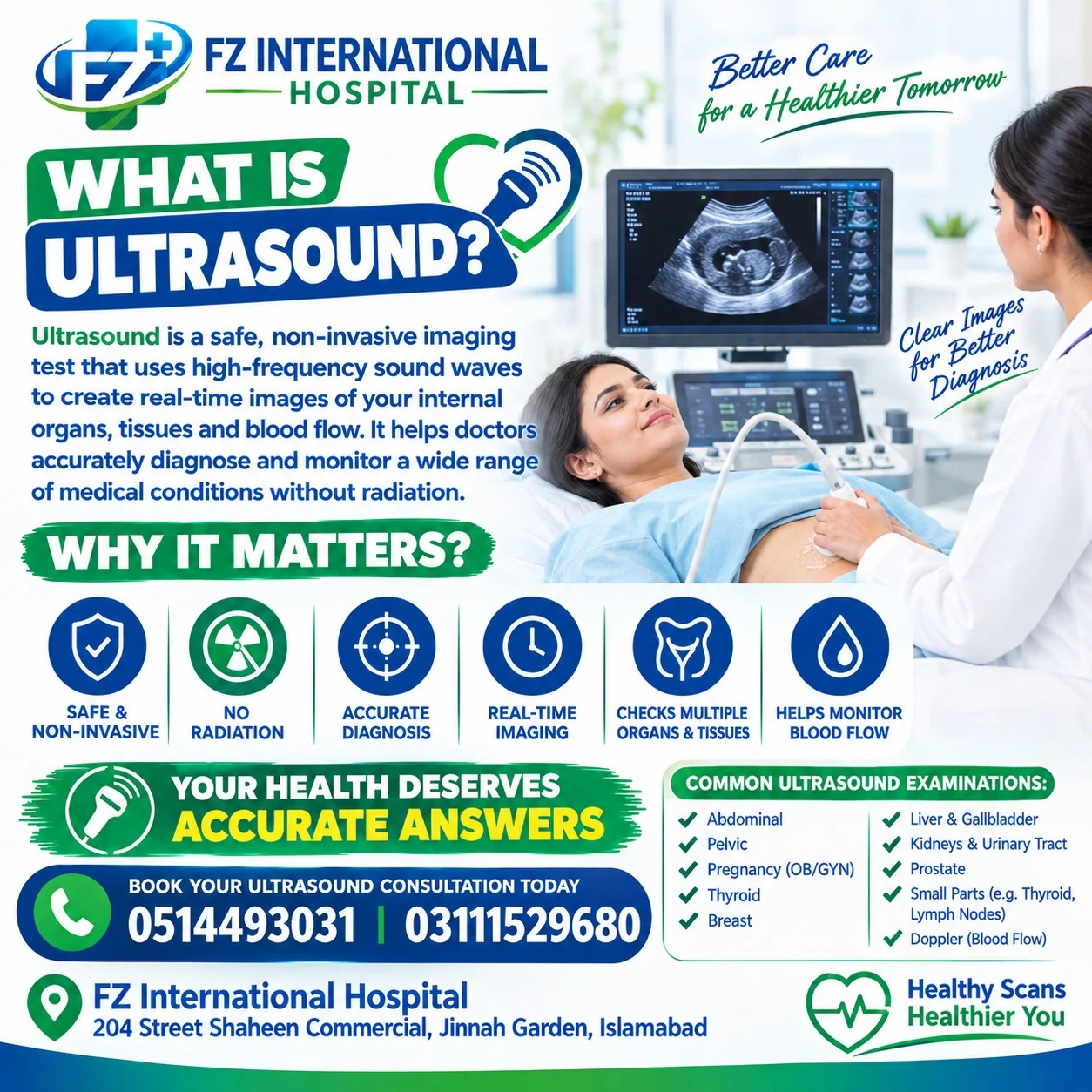
General and small-parts ultrasound
Ultrasound uses sound waves rather than ionising radiation to form images. The right study depends on the clinical question; a normal scan cannot exclude every disease.
- Abdomen, whole abdomen and KUB (kidneys, ureters and bladder)
- Thyroid, breast and soft-tissue assessment
- Scrotal ultrasound; sudden severe testicular pain needs emergency assessment
Women’s health and pregnancy scans
Pelvic and transvaginal scans answer different questions. TVS is an internal examination, performed only with informed consent; ask about a chaperone and alternatives. Tell the operator if you are uncomfortable and you can ask to stop.
- Early pregnancy and dating scans
- Nuchal translucency (NT) assessment at the appropriate stage
- Anomaly scan, generally planned around 18–22 weeks according to the care plan
- Growth scans, biophysical profile (BPP) and fetal wellbeing assessment
What an anomaly scan can show
The scan examines the developing baby’s anatomy, measurements and other features relevant to the pregnancy. It cannot find every condition or guarantee a healthy baby. Position and image quality can limit the examination, and further imaging or specialist review may be recommended.
Doppler and men’s scans
Colour, arterial and venous Doppler assess selected blood-flow questions. Available requests include suspected DVT, varicose veins, carotid and obstetric Doppler, renal artery and scrotal Doppler. The referring clinician selects the appropriate study.
FZ’s penile Doppler is performed without injection. It provides selected structural and resting-flow information and is not equivalent to an injection-assisted erectile-function study; discuss what it can answer with the referring clinician.
Preparation, timing and reports
Ask for instructions for your exact scan: some abdominal scans require fasting, while some pelvic scans require a full bladder. TVS preparation differs. Do not fast, force fluids or change medicines without the team’s advice, particularly with diabetes or a fluid restriction.
Many scans take around 15–30 minutes; complex or pregnancy scans may take longer. Bring the referral, previous reports and medicine list. Reports are often available the same day; reception confirms the actual timing and current fee.
Pregnancy, abdominal and small-part scans
The hospital lists early-pregnancy, dating, NT, anomaly and growth scans, with Doppler or a biophysical profile when indicated. Other enquiries include abdominal organs, KUB (kidneys, ureters and bladder), thyroid, breast, scrotal and soft-tissue ultrasound. The requested scan, operator and appointment should be confirmed in advance; ultrasound cannot detect every abnormality and sometimes further imaging is needed.