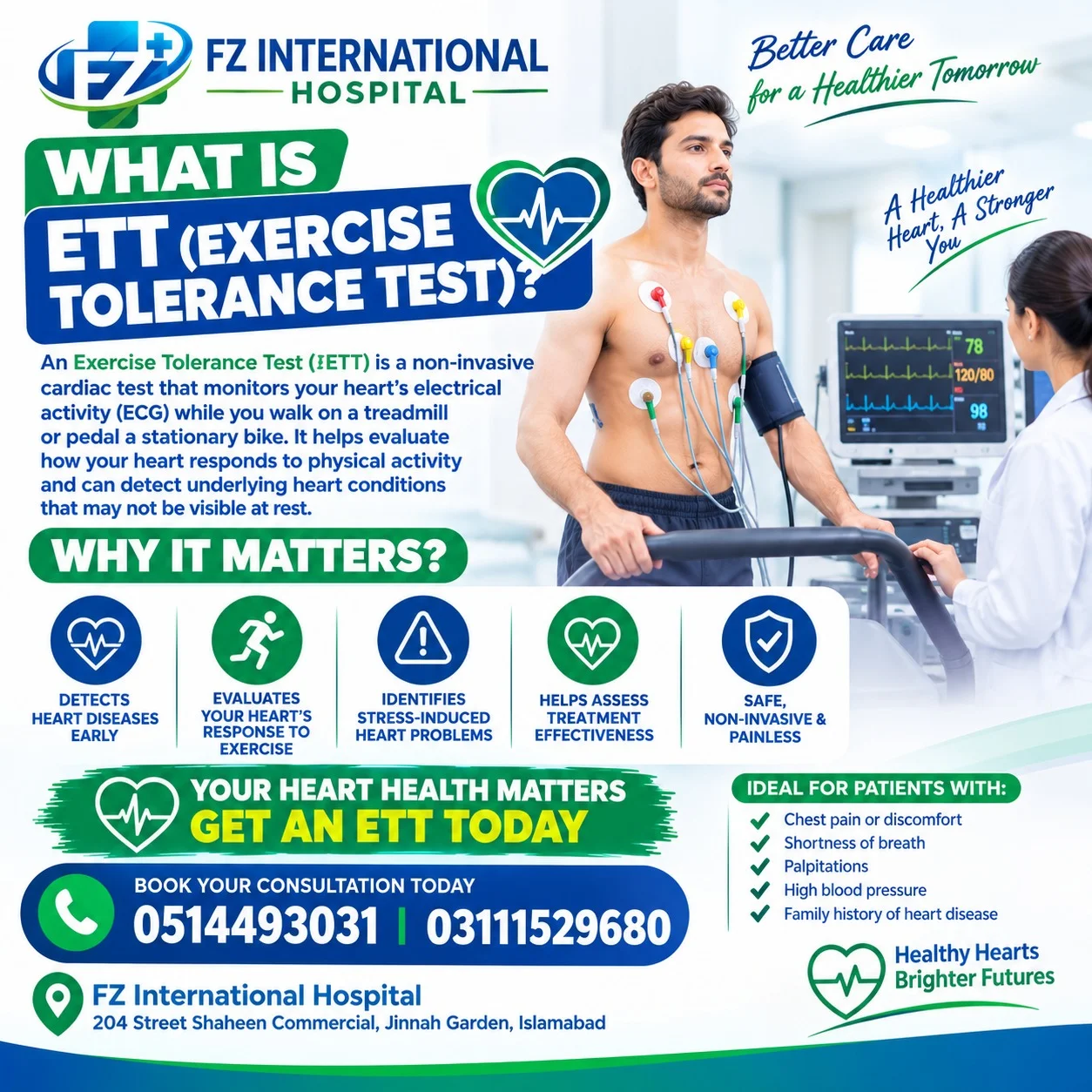
What ETT can and cannot tell you
ETT may help investigate exertional symptoms, exercise capacity, rhythm changes or possible reduced blood supply to the heart. It is not a definitive image of blocked arteries and is not routine screening for every healthy person. Your clinician may recommend a different test.
Rest, exercise and recovery
Electrodes record an ECG while treadmill speed and incline increase in stages. Staff monitor symptoms, heart rate and blood pressure, then continue observation during recovery. Tell the team immediately about pain, dizziness or breathlessness; the test can be stopped when indicated.
Allow roughly 30–45 minutes for the visit, sometimes longer. Listed ETT charge: Rs. 4,000; confirm current charges and report timing with reception.
Prepare for your treadmill test
- Wear comfortable clothes and supportive walking shoes.
- Ask about meal and caffeine restrictions. Avoid a heavy meal just before testing.
- Bring previous cardiac reports and a medicines list. Do not stop heart medicines unless the testing clinician tells you to.
- Tell the team about diabetes, mobility limits, pregnancy possibility and current symptoms. Ask for an individual meal and medicine plan if you have diabetes.