
Skin, hair, scalp and nail concerns can affect comfort and daily life. Many minor problems settle, but persistent, recurrent, painful or unexplained symptoms may need a Dermatology assessment.
Repeated home remedies or over-the-counter products can delay the right diagnosis and may irritate the skin. A dermatologist can assess the pattern, possible triggers and whether treatment, testing, monitoring or referral is appropriate.
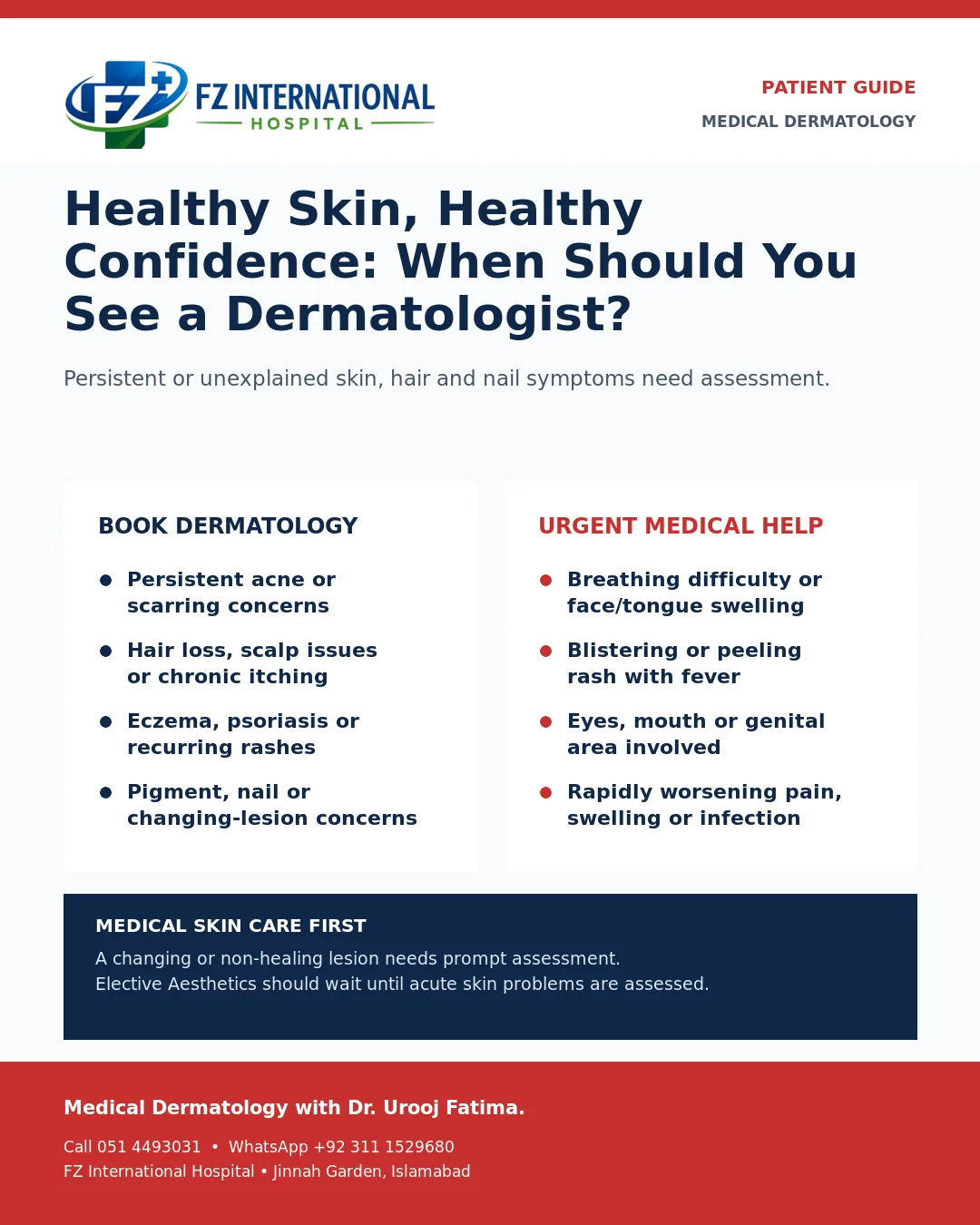
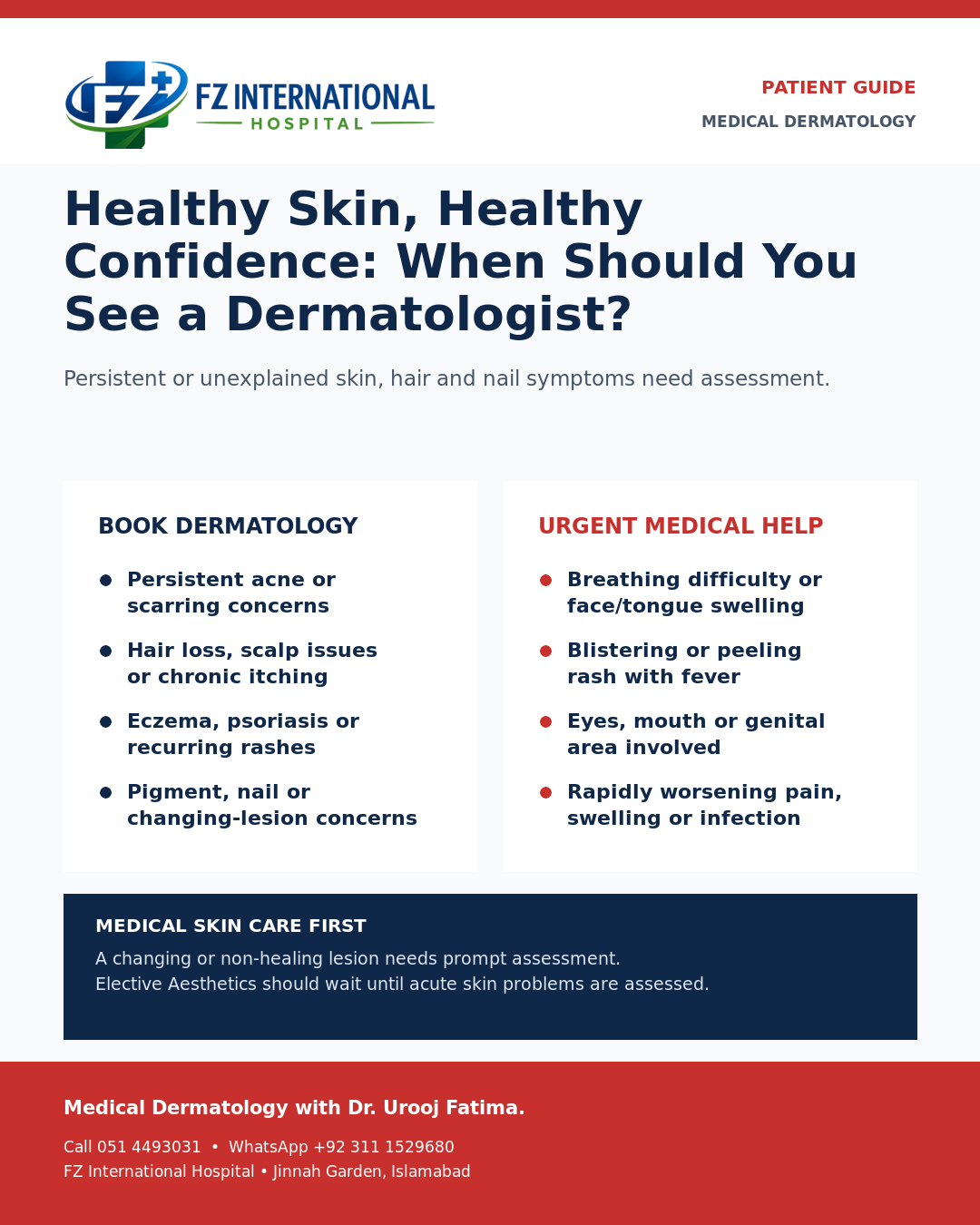
Some skin symptoms need urgent medical care
Seek urgent assessment rather than a routine Dermatology booking for severe allergy, extensive skin injury or serious infection signs.
- Breathing difficulty or swelling of the lips, tongue, face or throat
- A rapidly spreading, blistering or peeling rash, especially with fever
- A severe rash involving the eyes, mouth or genital area
- Rapidly worsening pain, swelling, pus, red streaking or feeling acutely unwell
What does a dermatologist assess?
Dermatology covers medical conditions affecting the skin, hair, scalp and nails. Common reasons for assessment include acne, eczema, psoriasis, skin allergies, hair loss and pigmentation concerns.
- Acne and acne-related marks or scarring
- Eczema, psoriasis and persistent rashes
- Skin allergies, itching or irritation
- Hair loss and scalp concerns
- Pigmentation, melasma or unexplained colour change
- Persistent nail or suspected skin-infection concerns
Acne and hair loss deserve an individual assessment
Acne can affect teenagers and adults. Painful spots, cysts, repeated breakouts or scarring concerns may benefit from medical assessment. Treatment depends on the type and severity of acne, skin sensitivity, pregnancy considerations and previous products or medicines.
Hair shedding or thinning can have genetic, hormonal, nutritional, medication-related, stress-related or scalp causes. Early assessment can clarify the likely contributors, but no treatment can guarantee regrowth or prevent all future loss.
Rashes, eczema and psoriasis
Redness, itching or a rash can result from irritation, allergy, eczema, infection or other skin conditions. Eczema often causes dry, inflamed and itchy skin. Psoriasis is an immune-mediated condition that may cause well-defined scaly patches and nail changes.
Because these conditions can resemble one another, a professional assessment is safer than assuming the cause from appearance alone.
Pigmentation, suspected infection and persistent itching
Melasma, dark spots and uneven colour can relate to sun exposure, inflammation, hormones, medicines or other factors. Treatment choice must consider the cause, skin type and risk of irritation or further pigmentation.
Fungal and other skin infections need the correct diagnosis because several rashes look similar. Persistent itching that disrupts sleep or daily activity also deserves assessment, including consideration of non-skin causes where appropriate.
Nail changes and concerning skin lesions
Thickening, brittleness, colour change or inflammation around a nail may have several causes. A dermatologist can assess whether a nail condition, infection, injury or another issue is likely.
Arrange a prompt medical assessment for a new or changing mole or lesion, bleeding without a clear injury, a sore that does not heal or a marked change in size, shape or colour. These signs do not prove cancer, but they should not be ignored.
When should you see a dermatologist?
- Persistent acne, painful breakouts or scarring concerns
- Hair loss, scalp symptoms or unexplained thinning
- A recurring rash, eczema, psoriasis or chronic itching
- Suspected fungal infection or repeated skin infection
- Pigmentation, melasma or unexplained skin changes
- Nail changes or a new, changing or non-healing lesion
Medical Dermatology at FZ International Hospital
Dr. Urooj Fatima is listed as FZ's Dermatologist, with confirmed clinical focus including acne, eczema, psoriasis, hair loss, skin allergies and pigmentation. Medical skin concerns should start with Dermatology; elective appearance-focused concerns may be routed to the separate Aesthetics service after assessment.
Important
This article cannot identify a skin condition from symptoms or appearance alone. In-person assessment may be needed before treatment is selected.