
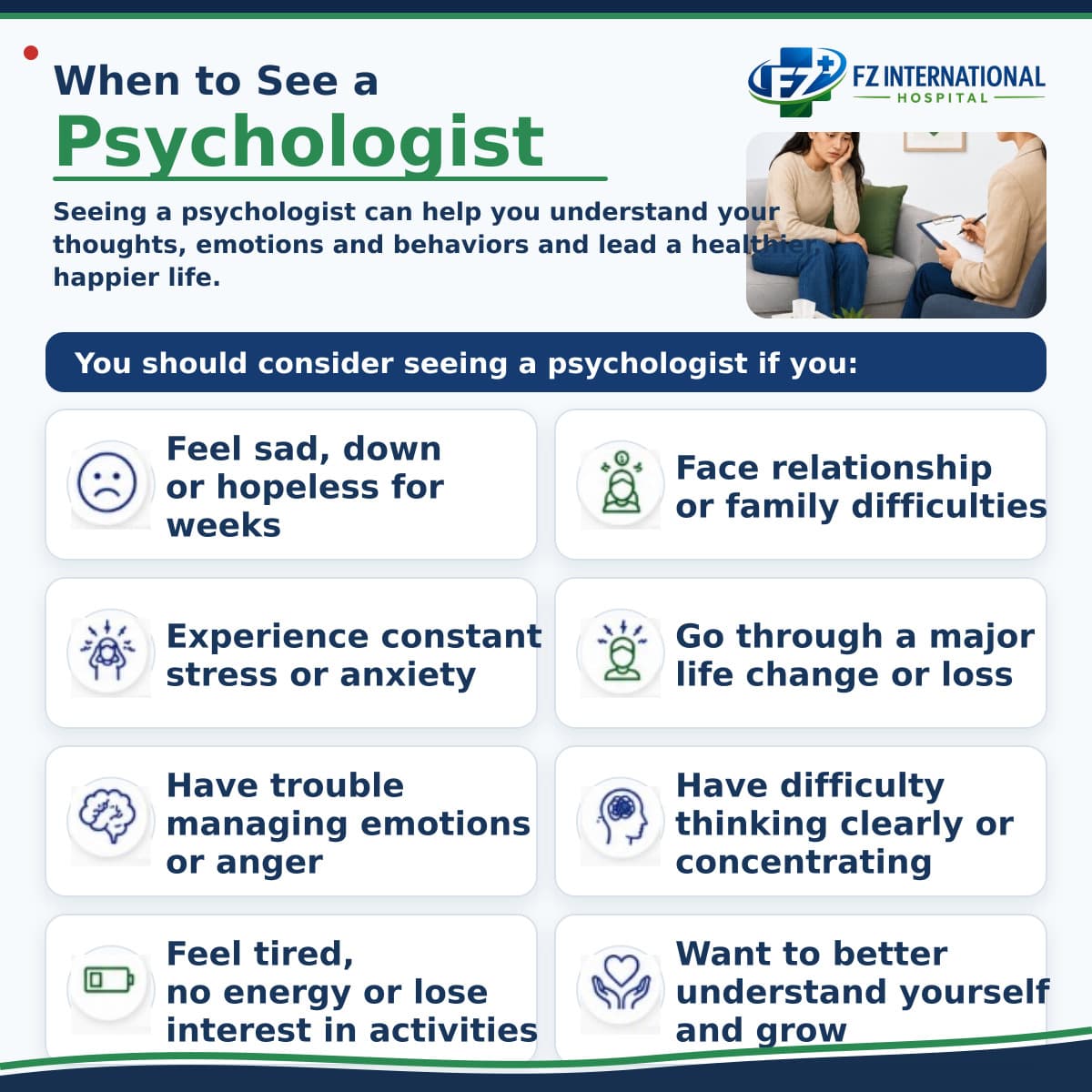
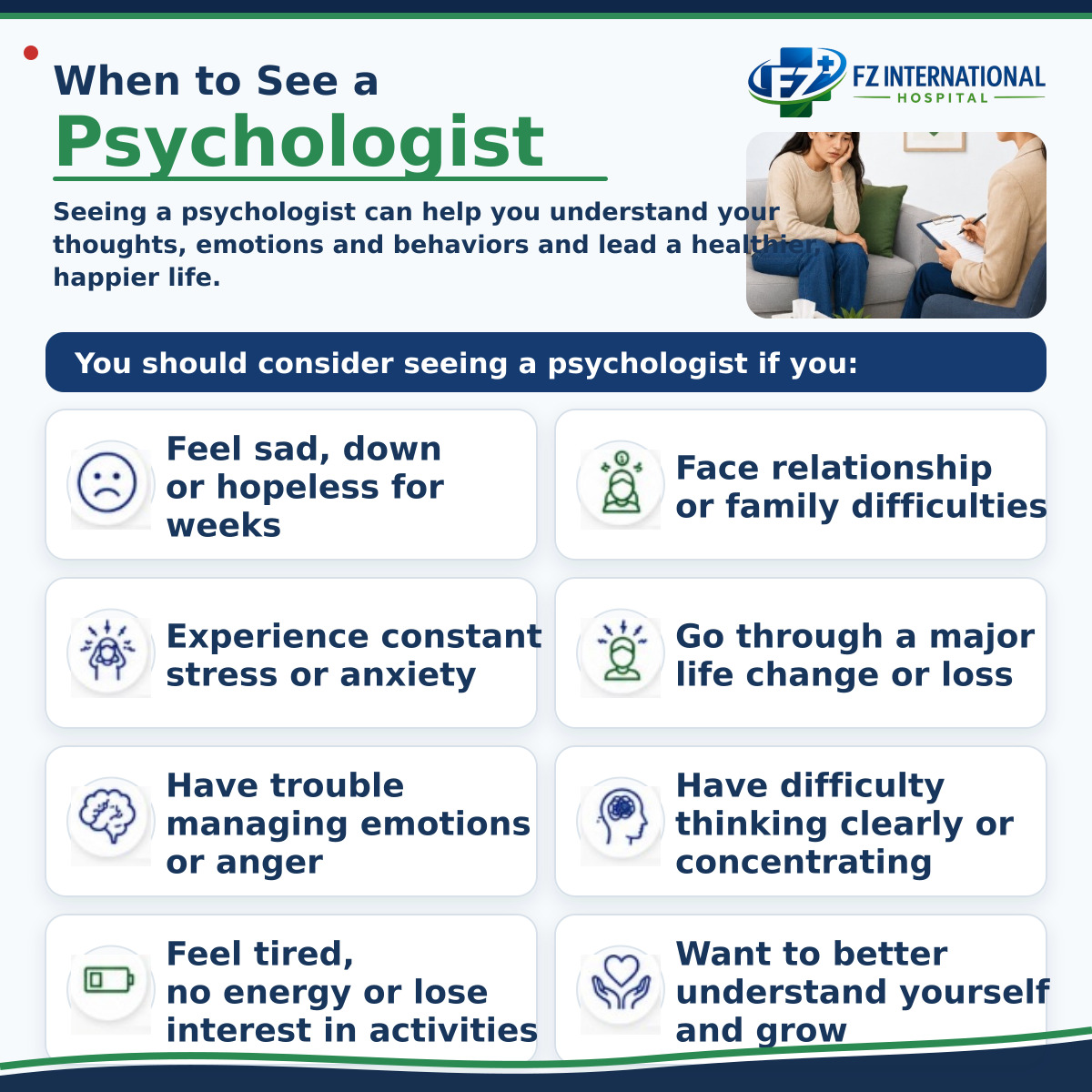
Life includes periods of stress, uncertainty and loss. These experiences do not automatically mean that someone has a mental-health disorder. Support may be worth considering when distress persists, feels difficult to manage or begins affecting relationships, work, studies, sleep or everyday functioning.
A psychologist can offer structured assessment, counselling and psychotherapy within their clinical scope. Seeking support is a health decision, not a sign of weakness, and you do not need to wait until a concern becomes severe before asking for an assessment.
Immediate safety concerns need urgent help
Do not wait for a routine Psychology appointment if you or someone else may be in immediate danger.
- Thoughts of suicide, self-harm or harming another person
- An inability to remain safe, severe confusion or unsafe behaviour
- Hallucinations accompanied by danger, severe agitation or loss of control
- Any rapidly worsening mental-health crisis
What does a psychologist do?
A psychologist helps people explore emotional, behavioural and psychological concerns through assessment and structured talking or behavioural approaches. The exact approach depends on the clinician's training, the person's needs and an initial assessment.
Clinical Psychology is different from Psychiatry. A psychiatrist is a medical doctor who can provide medical psychiatric assessment and medication management when indicated. A psychologist generally focuses on psychological assessment, counselling and psychotherapy and does not prescribe medication.
- Anxiety, persistent worry or difficulty relaxing
- Low mood, reduced interest or emotional distress
- Stress related to work, studies or daily responsibilities
- Relationship, family, parenting or communication concerns
- Grief, loss, difficult life changes or trauma-related concerns
- Anger, self-esteem, behavioural or coping concerns
When anxiety or stress affects daily life
Feeling nervous before an exam, interview or important event can be a normal response. An assessment may be useful when worry is persistent, hard to control or accompanied by restlessness, irritability, overthinking, poor concentration or sleep problems.
Chronic stress can also contribute to emotional exhaustion, mood changes, headaches, fatigue or difficulty managing responsibilities. These symptoms can have mental or physical causes, so the right starting point depends on the full clinical picture.
New or severe chest pain, fainting, severe breathing difficulty, sudden weakness or other acute physical symptoms need urgent medical assessment and should not automatically be labelled anxiety or panic.
Low mood is more than an occasional difficult day
Everyone feels down at times. Consider professional assessment when sadness, loss of interest, low energy, hopelessness, social withdrawal, concentration problems or changes in sleep or appetite persist or interfere with daily life.
These signs are not a self-diagnosis. A clinician can consider psychological, medical, medication-related and situational contributors and discuss an appropriate care route.
Relationships, grief and difficult experiences
People may seek counselling for relationship stress, family conflict, communication problems, parenting concerns, bereavement or major life changes. The aim is to understand patterns and develop practical ways of responding; counselling cannot guarantee a particular relationship or emotional outcome.
After a traumatic experience, some people notice fear, intrusive memories, avoidance, emotional distress or difficulty trusting others. A qualified clinician can assess these concerns and discuss suitable support without pressuring a person to disclose more than they are ready to discuss.
Children and teenagers may need support too
Changes in behaviour, concentration, school participation, confidence, mood or social interaction can have many causes. A parent or caregiver can ask whether a psychological assessment is appropriate.
Age eligibility and the clinician available for child or adolescent care should be confirmed with reception before booking. Urgent safety concerns still require immediate emergency support rather than a routine appointment.
Self-esteem, coping and personal growth
Persistent self-doubt, negative self-talk, fear of failure or difficulty expressing needs can affect decisions and relationships. Psychological support can help a person examine these patterns and practise coping or communication skills, but outcomes differ between individuals.
When should you book a Psychology consultation?
- Stress, anxiety or low mood that persists or affects daily functioning
- Difficulty coping with work, studies, relationships or a major life change
- Grief, trauma-related distress, anger or self-esteem concerns
- Parenting questions or behavioural and emotional concerns in a child
- A wish to understand patterns, coping strategies or personal goals
If you are unsure whether Psychiatry or Clinical Psychology is the better starting point, reception can help route your request. A clinician may also recommend coordinated care between the two services.
Clinical Psychology at FZ International Hospital
FZ lists Cdr. (R) Dr. Fayyaz Ahmed Anjum, Ms. Rimsha Ateeq Paracha and Mr. Muhammad Umar Fayyaz for Clinical Psychology concerns including stress, anxiety, behavioural or relationship concerns, counselling and psychotherapy. Mr. Muhammad Umar Fayyaz also provides child, adolescent, adult and athlete-focused support within his listed scope. Appointment availability and age eligibility are confirmed by reception.
Consultations are handled respectfully and with appropriate privacy. Confidentiality is subject to applicable legal, safeguarding and immediate-safety obligations, which the clinician can explain.
Important
This article provides general education and cannot diagnose a mental-health condition or replace an individual assessment.