
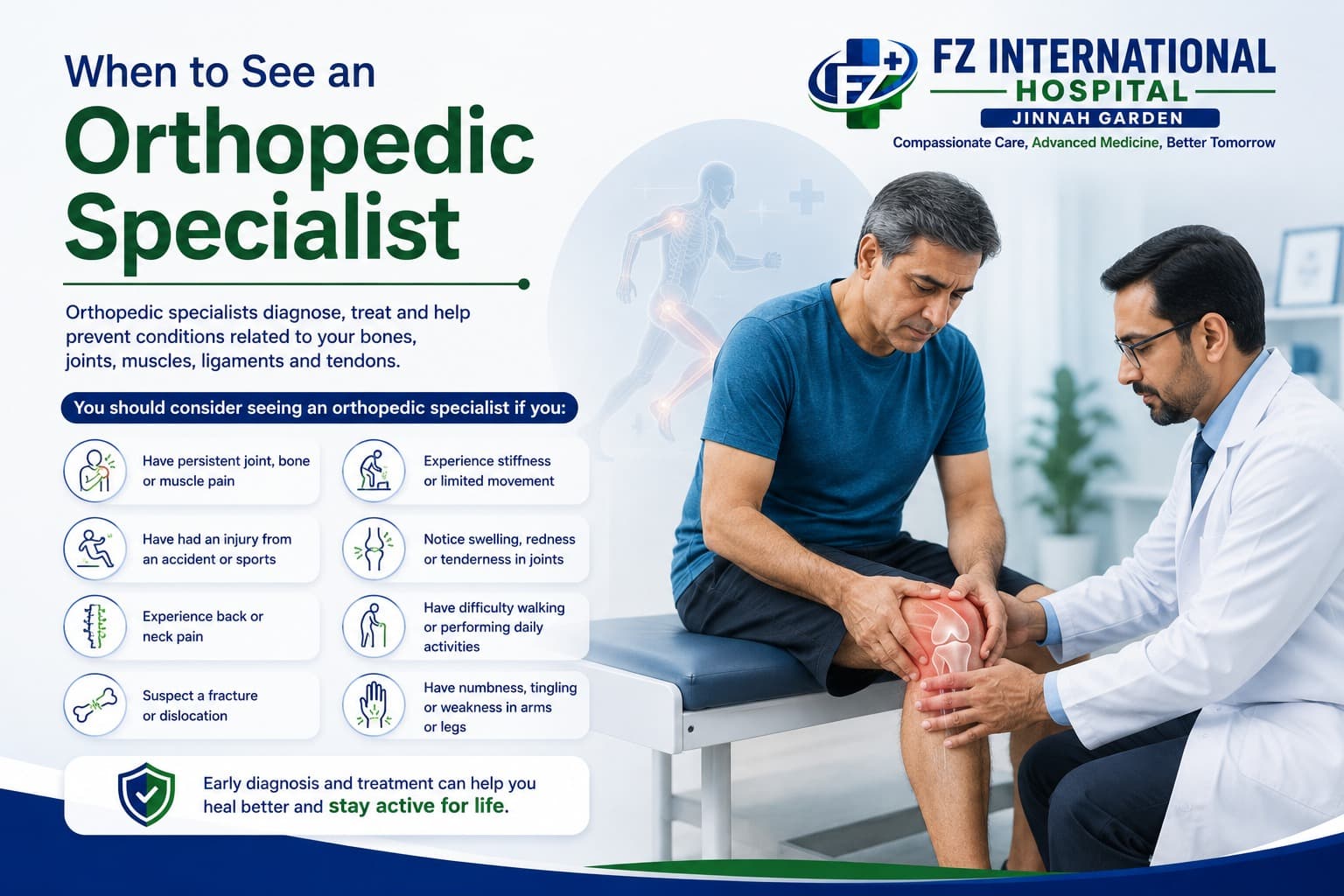
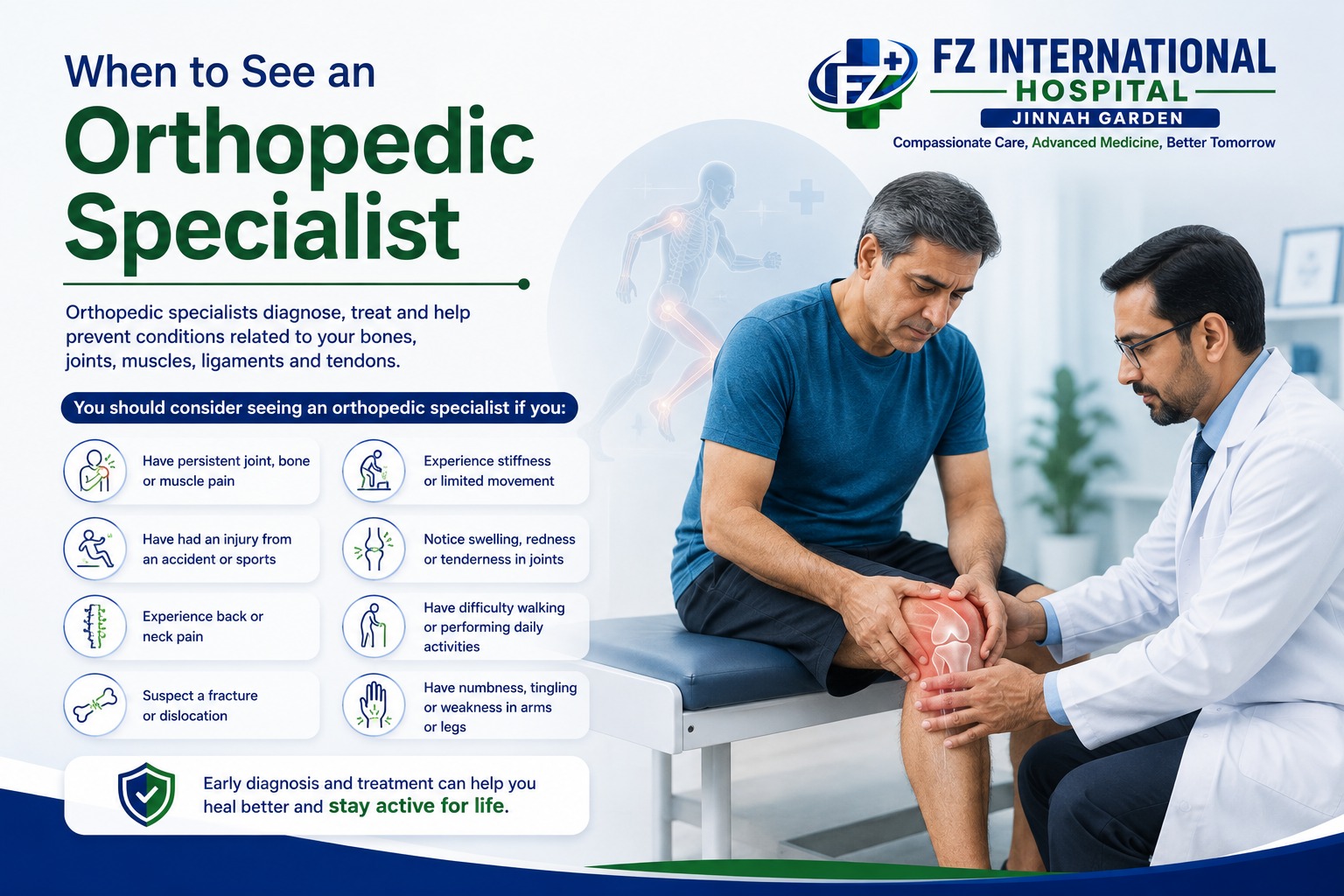
Bone, joint, muscle or spine symptoms can make walking, climbing stairs, working or exercising difficult. Not every ache means a serious problem, but persistent pain, swelling, instability or loss of function deserves appropriate assessment.
At FZ International Hospital, the confirmed Orthopedics scope includes joint pain, fractures, arthritis, back pain, sports injuries and bone disorders with Dr. Haroon Rashid, Consultant Orthopedic Surgeon.
Seek urgent assessment for injury or neurological warning signs
Use emergency care rather than a routine web booking when symptoms suggest a serious injury, infection, loss of circulation or spinal nerve compression.
- Major trauma, an open injury, visible deformity or suspected fracture
- Inability to bear weight, a cold/pale limb or new loss of sensation
- A hot, very swollen joint with fever or feeling acutely unwell
- Rapidly progressive weakness, new bladder/bowel loss or saddle numbness
What does an Orthopedic specialist assess?
Orthopedics focuses on the musculoskeletal system: bones, joints, muscles, ligaments and tendons. Depending on the concern, care may involve assessment, imaging, activity advice, medication, a procedure, surgery or referral for rehabilitation.
- Joint and knee pain
- Fractures and traumatic injuries
- Arthritis and stiffness
- Back pain
- Sports injuries
- Other bone or movement concerns
Knee pain, arthritis and reduced mobility
Knee pain can follow an injury or develop gradually. Pain while walking, swelling, stiffness, locking or a feeling of instability may warrant assessment, especially when symptoms persist or limit normal activity.
Arthritis is one possible cause of joint pain and morning stiffness, but symptoms can have several causes. An Orthopedic assessment can help clarify the likely source and discuss suitable management; it cannot promise a pain-free result.
Back and neck pain: choose the right starting point
Back or neck pain may relate to posture, strain, injury, joints, discs or nerves. Orthopedics can assess musculoskeletal and structural concerns. Physiotherapy may support movement and rehabilitation after appropriate assessment, while significant nerve or spine symptoms may need Neurosurgery or urgent medical review.
Pain travelling into a limb with progressive weakness, new bladder or bowel loss, or numbness around the saddle area requires urgent assessment.
Shoulder problems and sports injuries
Shoulder pain or stiffness can affect dressing, driving and lifting. Sports injuries may involve sprains, strains, muscles, tendons or ligaments. Stop the activity and seek assessment when pain is severe, a joint looks deformed, weight-bearing is not possible or symptoms do not settle as expected.
A safe return to activity depends on the diagnosis, severity, healing and rehabilitation plan; no fixed recovery time applies to every patient.
Fractures, hip pain and bone-health concerns
Severe pain, swelling, bruising, deformity or inability to use a limb after trauma may indicate a fracture and needs prompt assessment. Hip pain can have joint, muscle, tendon or fracture-related causes and may significantly affect walking.
If bone fragility or osteoporosis is a concern, ask the clinician which assessment, tests or referral are appropriate and currently available. Do not assume that a particular screening test is offered without confirmation.
Hand, wrist and elbow symptoms
Pain, numbness or weakness in the hand or arm may come from tendons, joints or nerves. Symptoms such as suspected carpal tunnel syndrome, trigger finger or tennis elbow require assessment because treatment depends on the cause and severity.
When should you book an Orthopedic consultation?
- Joint, knee, hip, back, neck or shoulder pain that persists
- Swelling, stiffness, locking, instability or reduced movement
- A sports injury that limits activity or is not improving
- Ongoing symptoms after a fracture or other injury
- Bone-health concerns or unexplained loss of function
Orthopedics at FZ International Hospital
Dr. Haroon Rashid is listed as FZ's Consultant Orthopedic Surgeon. Reception can confirm consultation availability and whether your concern should start with Orthopedics, Physiotherapy, Neurosurgery or Emergency care.
Important
This guide is educational. Examination and, when indicated, imaging are needed to determine the cause of musculoskeletal symptoms.