
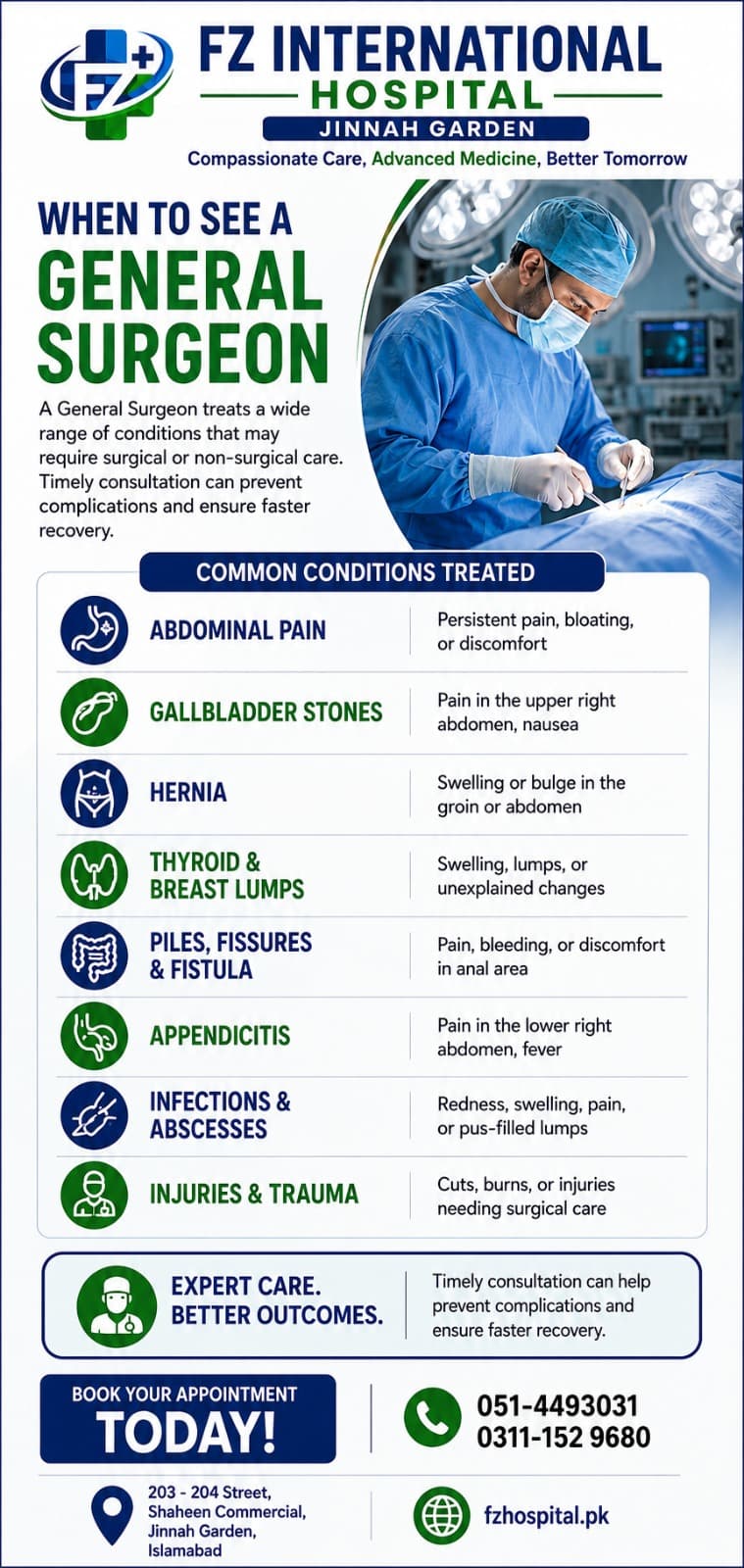
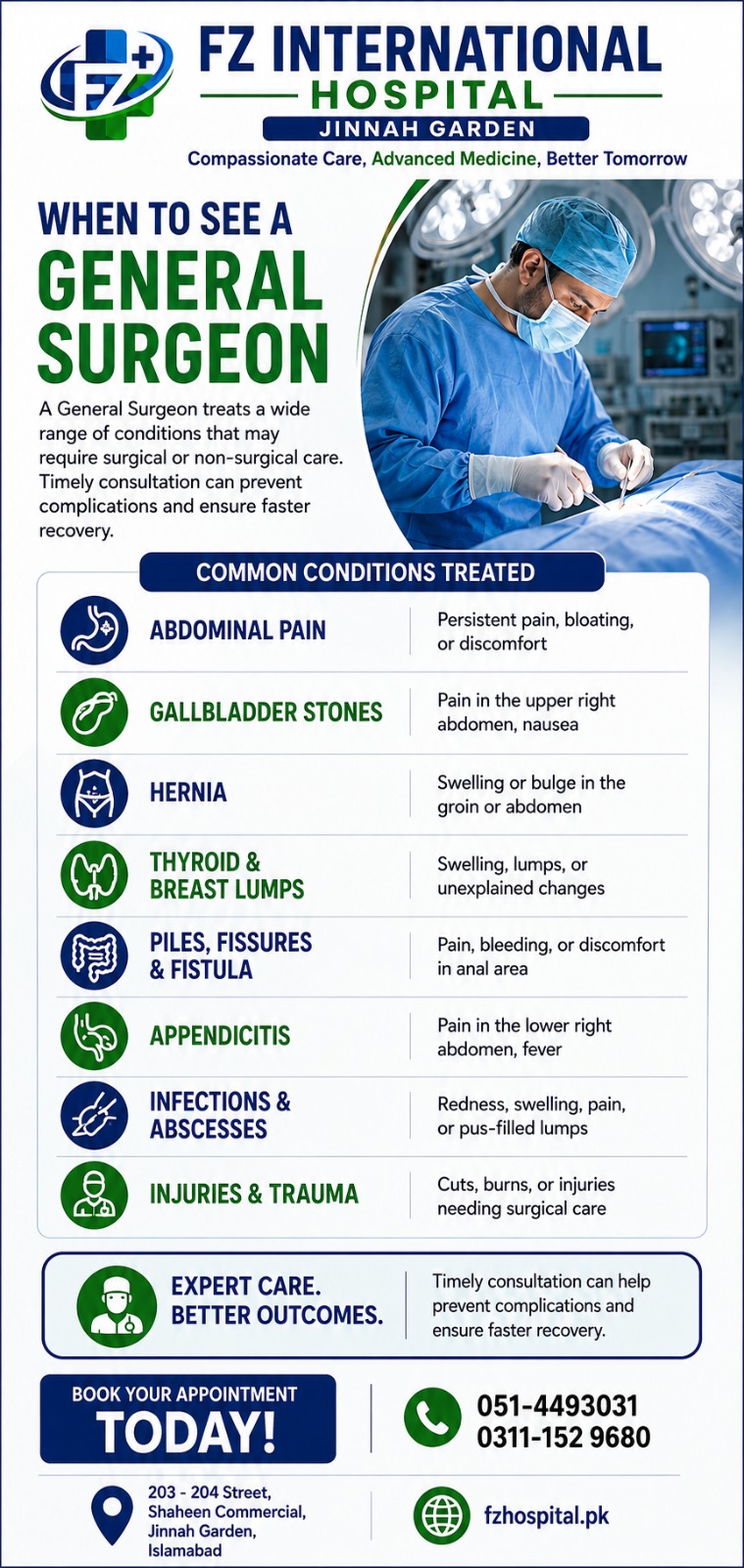
Some abdominal, breast, skin or soft-tissue concerns may benefit from a General Surgery assessment. Seeing a surgeon does not automatically mean that an operation is needed: the first step is to assess the likely cause, urgency and available management options.
FZ's confirmed General & Laparoscopic Surgery scope includes laparoscopic and day-case procedures, hernia and gallbladder concerns, appendix and abdominal surgery, minor procedures, piles, breast lumps and pre- or post-operative care.
Acute abdominal or surgical warning signs need urgent care
Do not wait for a routine clinic appointment if symptoms suggest appendicitis, bowel obstruction, a trapped hernia, major bleeding or another acute illness.
- Sudden, severe or rapidly worsening abdominal pain, especially with fainting or a rigid abdomen
- Right-lower abdominal pain with fever, repeated vomiting or marked tenderness
- A painful hernia that becomes firm, discoloured or cannot be pushed back, especially with vomiting or abdominal swelling
- Heavy rectal bleeding, black stools, vomiting blood, severe weakness or collapse
What does a General Surgeon assess?
General surgeons assess conditions that may require a procedure or operation, particularly abdominal-wall, gallbladder, appendix, digestive, breast, skin and soft-tissue concerns. Depending on findings, the plan may be observation, medicines, tests, referral, a minor procedure or surgery.
Hernia: when a bulge needs assessment
A hernia may appear as a groin or abdominal-wall bulge that becomes more noticeable with coughing, lifting or standing. It may cause pressure or discomfort, but not every lump is a hernia.
Arrange assessment if a bulge persists, enlarges or causes pain. Sudden severe pain, vomiting, discolouration or inability to reduce the bulge can indicate trapping or loss of blood supply and needs urgent care.
Gallbladder and appendix symptoms
Gallstones can cause upper-abdominal pain, sometimes after food, with nausea or vomiting, but similar symptoms can have other causes. Fever, jaundice, persistent pain or repeated vomiting needs prompt medical assessment.
Appendicitis may begin with central abdominal discomfort that moves to the lower right, often with loss of appetite, nausea, fever or tenderness. Symptoms vary, so suspected appendicitis requires urgent assessment rather than self-diagnosis.
Piles and rectal symptoms
Piles can cause bright-red bleeding, itching, swelling or discomfort, but rectal bleeding should not automatically be attributed to piles. Fissures, inflammation and other bowel conditions can produce similar symptoms.
A clinician can assess the pattern and decide whether conservative care, testing, referral or a procedure is appropriate. Heavy bleeding, black stools, fainting or severe illness needs urgent care.
Breast lumps and other unexplained swellings
Many lumps are benign, but a new or changing breast lump, nipple discharge, skin dimpling, nipple change or persistent focal discomfort should be medically assessed. The next step may involve examination, imaging or referral rather than immediate surgery.
Skin or soft-tissue lumps may include cysts, lipomas, abscesses or other conditions. Rapid growth, severe pain, fever, redness or drainage warrants timely assessment.
What does laparoscopic surgery mean?
Laparoscopic surgery uses a camera and instruments through small incisions for selected operations. It may reduce incision size for suitable patients, but it does not guarantee less pain, minimal scarring, a short stay or faster recovery.
The safest approach depends on the condition, previous surgery, anatomy, urgency and clinical assessment. Conversion to an open operation can sometimes be necessary, and the surgeon should explain material risks and alternatives before consent.
General Surgery at FZ International Hospital
FZ lists Prof. Brig. (R) Dr. Ashfaq Ahmed Javed and Dr. Noor Fatima for General & Laparoscopic Surgery. Reception can confirm consultation and procedure availability; the surgeon confirms investigations, anaesthesia planning, suitability, expected recovery and follow-up.
Thyroid surgery, varicose-vein procedures, fistula surgery and other unlisted operations should be confirmed directly rather than assumed from the department name.
Important
This guide is general information. New, severe or rapidly worsening abdominal or bleeding symptoms need prompt clinical assessment and should not rely on an online article.